What we used to know about online shopping is becoming obsolete. For the last 20 years, e-commerce assumed a fairly simple interaction: I know roughly what I want → I type keywords → the retailer shows me matching products. But those days are over. Images are becoming the new entry point. People use chatbots to research products conversationally. Discovery happens on social media before someone ever reaches your site. And Gen-Z has particularly little reason to adapt its behaviour to the limitations of a retailer’s search bar.
For years, consumers had to learn how to speak the language of search engines. Now, search engines will need to learn how to speak human.
The search bar was built for a different kind of shopping
Traditional e-commerce works particularly well when the shopper knows what the product is called and the catalogue is neatly structured. That’s why a query like “Black Gucci leather jacket size M” will deliver great results.
But real shopping intent isn’t always that clear, and can often look like this: “I want something like this, but cooler toned“, “a jacket that works for this bridesmaid dress“, or “this Pinterest outfit but for under 100€ and second-hand if possible”.
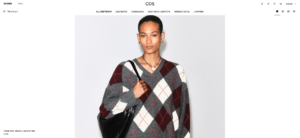
And if you think about it, these are much closer to how people naturally think about products. For a long time, e-commerce systems were simply not very good at understanding this kind of intent. And if you spend a few minutes on some of the biggest e-commerce sites, you can already observe images, disproportionately big compared to the rest of the page, and keywords slowly moving to the background
Product discovery is becoming visual, conversational and recommendation-led
Images are a stronger starting point, because they can communicate things that are difficult to describe precisely in words: silhouette, aesthetic, styling, context or vibes. A recent study by Retail Dive found that 85% of respondents placed more weight on visual than textual information when shopping online for clothing or furniture. Google has also highlighted that a quarter of monthly Google Lens searches are shopping-related, with younger users particularly active in visual search.
At the same time, conversational AI lets shoppers describe intent in a natural way, allowing them to add constraints and refine results without translating their desires into filters and search terms. Recommendation systems add another layer of surfacing products customers may have never searched for to begin with.
The result is that search is becoming less about matching words and more about understanding intent.
Resale makes this shift more obvious
Second-hand commerce is a prime example for this.
Traditional retail starts with a clean catalogue: one product, known SKU, standardised images, structured attributes and several units in stock. Resale data is much messier. The same product can appear listed by multiple marketplaces or individual sellers. Everyone using different images, different titles, missing attributes and completely different descriptions. And each listing is unique and can disappear any moment.
In this environment, keyword search quickly reaches its limits. If two sellers describe the same product differently, the system still needs to understand that they may be comparable. If important information is missing from the description, it may need to be inferred from the image. And if a shopper does not know the exact product name, there still needs to be a way to connect their intent with the right inventory.
That is why visual and conversational discovery are particularly valuable in resale: they help bridge the gap between how people naturally express what they want and how fragmented product inventory actually exists in our database.
How we approach this at faircado
At faircado, we aggregate and normalise millions of second-hand listings across dozens of resale marketplaces. Fragmented product data, inconsistent imagery and constantly changing availability are therefore not edge cases for us – they are the environment we work in every day.
This is why we prioritised image early on, making us a Gen Z favourite. We use image matching, personalised curation, similarity search, and searching your Pinterest boards inside the app to make fragmented resale inventory easier to understand and navigate.

Gen Z is accelerating the shift
Younger consumers grew up in a visual-forward world. That’s why they are especially comfortable and pushing for these new ways of discovering products. ThredUp’s Resale Report 2026 shows that 51% of Gen Z already use AI for things such as visual search, price comparison and fit.
That matters because Gen Z is also one of the generations pushing resale further into the mainstream. The consumers most comfortable moving between social platforms, AI assistants, visual search and marketplaces are also increasingly treating second-hand as a normal part of the shopping journey.
What this means for retail
The obvious response is to add image search, an AI assistant or another new interface. But the real challenge sits underneath.
If retailers want products to be discoverable through visual, conversational and AI-led search, their product data needs to be structured well enough for those systems to understand it. Images need to become an actual source of information. And retailers need to think about discoverability beyond their own website.
As AI increasingly becomes an intermediary between consumers and websites, this change isn’t one to ignore. At the same time, a Deloitte study shows that 75% of companies cite data as the main barrier to agentic commerce, while only 44% say their data is adequate for AI.
The search bar is not disappearing. But it is becoming one interface among many. Paired with consumers who are used to ultra-convenient shopping, just relying on a search bar is a practice of yesterday.
About the author
Evoléna de Wilde d’Estmael is Co-founder & CEO of Faircado, a resale discovery platform that aggregates and normalises millions of second-hand listings across European marketplaces. She writes about resale, Gen Z consumer behaviour and the future of ecommerce. This article expands on a post Evi originally shared on her LinkedIn.